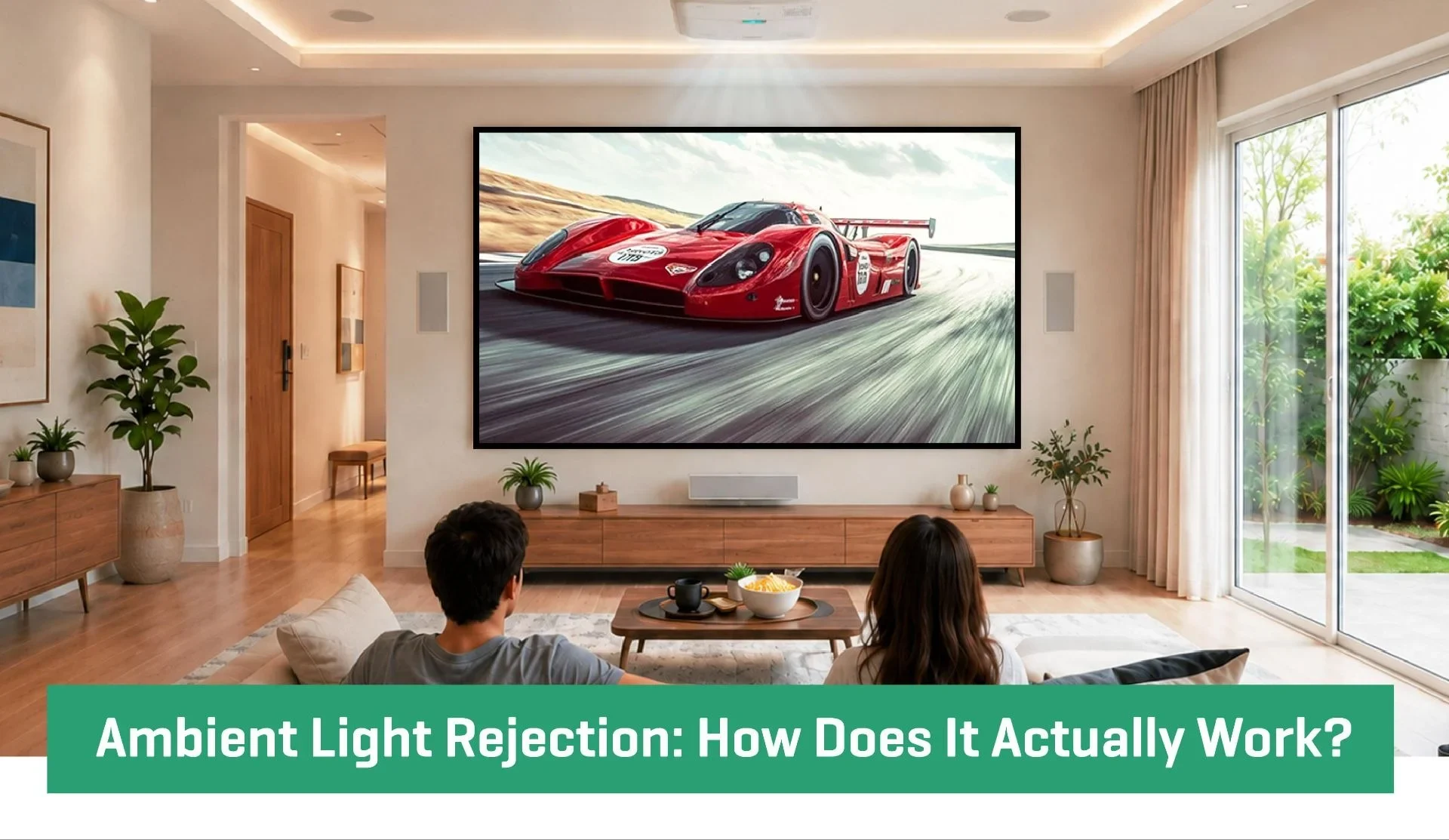
Projectors have become increasingly popular for home theaters, living rooms, boardrooms, and entertainment spaces because they can deliver an immersive large-screen experience. However, one challenge continues to affect image quality: ambient light. Whether it’s sunlight entering through windows or artificial lighting from ceiling fixtures, unwanted light can wash out projected images, making colors appear dull and reducing overall contrast.
This is where Ambient Light Rejection (ALR) screens come into play. Designed specifically to combat the effects of ambient light, ALR screens help projectors deliver brighter, sharper, and more vibrant images even in rooms that are not completely dark. But how does this technology actually work?
Understanding the Problem with Ambient Light
A traditional projection screen reflects light from all directions equally. While this allows the projector’s image to be displayed, it also means the screen reflects ambient light from windows, lamps, and other sources. As ambient light increases, image quality decreases.
The result is lower contrast, washed-out colors, and blacks that appear gray instead of deep and rich. This is why conventional projection systems perform best in darkened rooms.
What Is an Ambient Light Rejection Screen?
An Ambient Light Rejection screen is a specially engineered projection surface that selectively reflects light from the projector while minimizing the impact of ambient light. Instead of treating all incoming light equally, an ALR screen is designed to respond differently based on the direction from which the light arrives.
This selective light management helps preserve image brightness, contrast, and color accuracy, making ALR screens ideal for modern viewing environments.
How ALR Technology Works
The effectiveness of an ALR screen lies in its advanced optical design. Unlike standard screens, ALR surfaces use specialized structures and materials that control how light is reflected.
Directional Reflection
Projectors are typically positioned in a predictable location relative to the screen. Because the source of the projected light is known, ALR screens are designed to reflect that light directly toward viewers.
At the same time, light coming from other directions—such as overhead fixtures or side windows—is redirected away from the audience or absorbed by the screen surface. This selective reflection helps maintain image clarity and contrast even when ambient light is present.
Optical Surface Structures
Although an ALR screen may appear smooth to the naked eye, its surface often contains microscopic optical patterns. These structures act like tiny light-control mechanisms that manage how incoming light behaves.
They maximize the reflection of projector light while reducing the visibility of unwanted environmental light, helping the screen perform effectively in brighter spaces.
Multi-Layer Construction
Many ALR screens also incorporate multiple optical layers. These layers work together to enhance brightness, improve contrast, and reduce glare. Some layers reflect projector light efficiently, while others absorb ambient light that would otherwise interfere with the image.
The result is a more balanced and visually appealing picture in challenging lighting conditions.
Why ALR Screens Are Becoming Essential
Modern homes and commercial spaces are often designed with open layouts, large windows, and bright interiors. While these features create attractive environments, they can present challenges for projection systems.
ALR screens help overcome these limitations by allowing users to enjoy large-screen visuals without requiring complete darkness. Whether watching movies, gaming, or delivering presentations, viewers benefit from improved picture quality and a more immersive experience.
As projection technology continues to evolve, Lumina Screens offers advanced ALR screen solutions designed to enhance image quality in real-world environments. These screens enable users to experience sharper visuals and deeper contrast, even in spaces with significant ambient light.
Conclusion
Ambient Light Rejection technology has transformed the way projectors perform in modern environments. By intelligently managing how light is reflected, absorbed, and redirected, ALR screens help preserve brightness, contrast, and color accuracy even in rooms with significant ambient light.
As more homeowners and businesses seek large-screen experiences without sacrificing image quality, ALR screens have become an essential part of a high-performance projection setup. At Lumina Screens, our ALR solutions are designed to help users enjoy stunning visuals in real-world environments, ensuring that projector performance isn’t limited by room lighting conditions. Whether for home entertainment, corporate presentations, or commercial applications, the right ALR screen can unlock the full potential of your projection system.
What is an Ambient Light Rejection (ALR) screen?
An ALR screen is a specially engineered projection screen that reflects projector light toward viewers while minimizing the impact of ambient light from windows, lamps, and ceiling fixtures.
How does an ALR screen improve picture quality?
ALR screens improve contrast, brightness perception, and color accuracy by reducing the amount of unwanted ambient light reflected toward viewers.
Are ALR screens suitable for bright rooms?
Yes. ALR screens are specifically designed for environments with ambient light and perform significantly better than standard projection screens in bright spaces.
Can ALR screens be used with Ultra Short Throw (UST) projectors?
Yes. Many ALR screens are designed specifically for UST projectors and optimize image quality by reflecting light from below while rejecting overhead light.
Are ALR screens worth the investment?
For users who cannot completely darken a room, an ALR screen can dramatically improve image quality and overall viewing experience, making it a worthwhile investment.
- Date - June 19, 2026